
Union County Criminal History Checks
Choose the official channel by the stage of the case. PROMIS/Gavel tracks indictable matters in Superior Court. Municipal Court Case Search covers disorderly-persons, petty-disorderly-persons, traffic, and ordinance cases. The Union County jail lookup addresses current county custody, while an NJSP Personal Record Request is the route for a person reviewing their own fingerprint-linked New Jersey history.
Gather the legal name, spelling variants, approximate event date, municipality, complaint or docket number, and SBI number if known. A common name alone is weak proof. Compare the court, charge date, case number, and other identifiers before deciding that a result belongs to the right person.
- Identify whether the needed record is a police report, custody entry, municipal case, Superior Court case, or personal SBI history.
- Search the matching official system and narrow by Union County, municipality, case number, or SBI number when those fields are available.
- Record the complaint, ticket, indictment, accusation, or booking identifier shown in the result.
- Ask the creating agency or court for the underlying report, pleading, judgment, or certified disposition.
- Compare the final court outcome with the arrest or booking entry and correct any missing disposition through the court and NJSP channels.
The fuller court path is explained in the Union County Court Case Lookup, including how a public tracking result differs from a case file.
Four Union County Records Mistaken as One
A Union County police report describes what was alleged and what an officer did. A booking record shows intake and custody. A court file shows charges, hearings, amendments, and disposition. An SBI history joins fingerprint-supported arrest cycles to outcomes reported by courts and contributing agencies. None is a complete substitute for the others.
- Incident or arrest report
- The creating police agency records the allegation, location, officer action, and basic arrest facts.
- Booking or jail record
- Union County Corrections and BCI document intake, charge at booking, custody, and release status.
- Court case file
- The New Jersey Judiciary records filed charges, events, disposition, and sentence.
- Fingerprint history
- NJSP's State Bureau of Identification connects a person's own statewide arrest cycles with reported outcomes.
Following this four-part split prevents a jail entry from being read as a conviction or a police narrative from being treated as a judicial finding.
Official Background Checks in New Jersey
The New Jersey Criminal History Record Information (CHRI) services are maintained by the New Jersey State Police (NJSP), State Bureau of Identification (SBI), Identification & Information Technology Section, Criminal Information Unit. New Jersey does not provide an anonymous public name search of anyone. A Union County resident reviewing their own record uses a fingerprint-supported Personal Record Request. The online SBI-212A name check is limited to organizations authorized by statute, and its scope and service code depend on the lawful request category.
For fingerprint enrollment, IdentoGO by IDEMIA shows the service-code workflow used by New Jersey requesters.
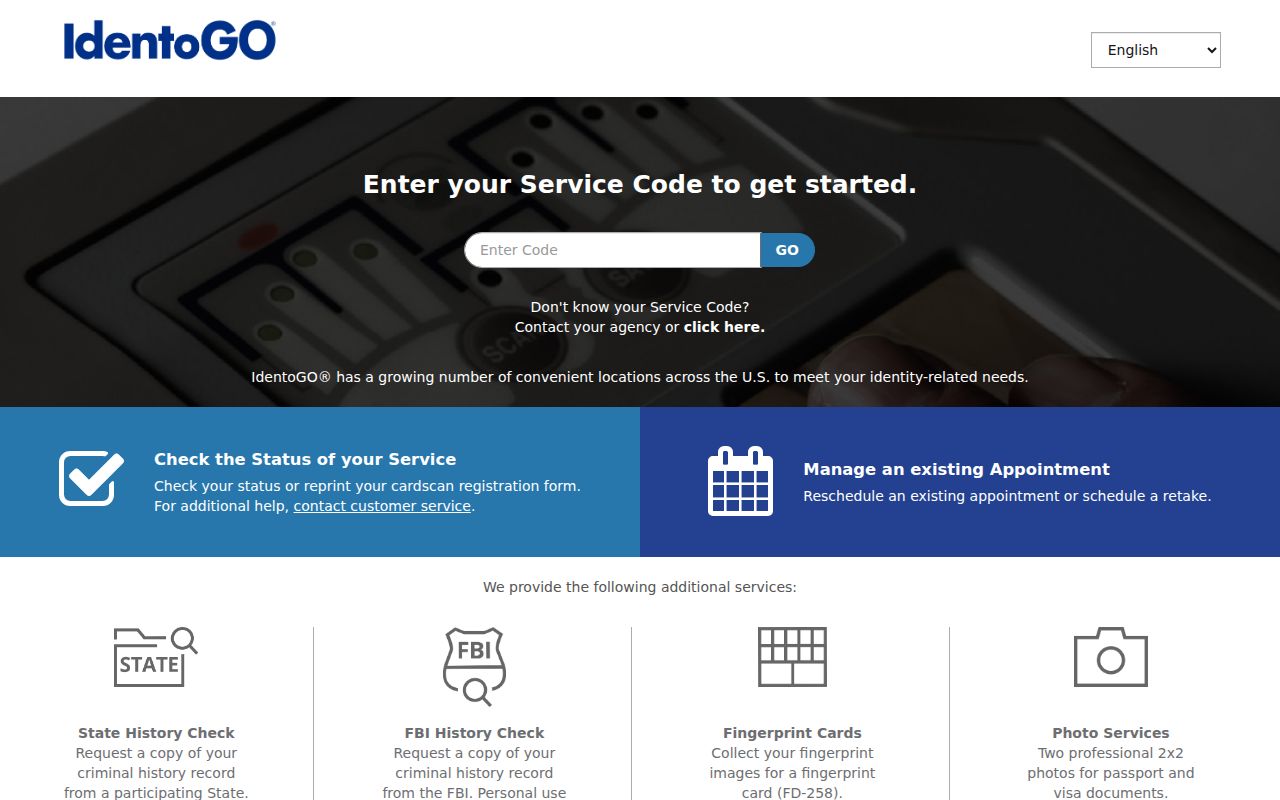
The enrollment screen matters because the correct service code or ORI must be entered before a live-scan site and appointment can be selected.
Enrollment asks for legal identity details, aliases, birth information, physical descriptors, contact details, an identity document, and appointment choices. The applicant presents acceptable ID and pays the amount displayed for that service. Out-of-state applicants follow NJSP cardscan directions. Prints collected for one statutory purpose ordinarily cannot simply be reused for another.
Inside Union County BCI Criminal Records
The Sheriff's Bureau of Identification at 2 Broad Street is a key local link in Union County criminal records. BCI fingerprints and photographs defendants, verifies jail admissions, maintains criminal identification files, collects qualifying DNA samples, and transmits live-scan data to NJSP and the FBI. It also implements expungement orders in its local files.
This creates a clear record flow: arresting agency → Union County BCI booking and live scan → NJSP SBI and FBI identifiers → municipal or Superior Court disposition → repository update. A delay at the disposition stage can leave a fingerprint cycle without its final result.
BCI is at 2 Broad Street, Attention BCI Unit, Elizabeth, NJ 07201, and its phone is 908-558-2630. The Union County Criminal Records Room is also at 2 Broad Street and is reached at 908-787-1650, extension 21035. Union County Corrections is at 15 Elizabethtown Plaza and is reached at 908-558-2600.
Name the Union County unit before visiting. The elected County Clerk is not the custodian of Superior Court criminal files, even though several government counters stand close together in Elizabeth.
Kinds of Criminal Records
Union County criminal records are created by different agencies at different moments. The arresting department keeps its report. Union County BCI and Corrections hold identification and custody data. Municipal courts and the Superior Court Criminal Part hold their own judicial records. NJSP keeps the fingerprint-supported statewide history.
- Complaints, indictments, and accusations: documents that begin or formalize charges, not final findings of guilt.
- Warrant records: court orders with issuing, case, status, and execution details, subject to access limits.
- Custody records: Union jail, NJDOC, and federal records that apply to different places and stages.
- Probation and parole records: public judgments may show supervision, while operational details are often confidential.
- Registry listings: the New Jersey Sex Offender Internet Registry publishes qualifying Tier 2 and Tier 3 records, while Tier 1 is not posted online.
The dedicated Union County Arrest Search follows the arresting-agency, jail, court, and SBI chain when no complete countywide arrest index exists.
Union County Court Records Use Two Searches
Indictable first- through fourth-degree crimes go through the Superior Court of New Jersey, Law Division, Criminal Part. Disorderly-persons, petty-disorderly-persons, traffic, and local ordinance cases generally stay in the municipal court where the complaint arose. New Jersey uses these degree and disorderly-persons terms instead of the usual felony and misdemeanor labels. Searching only one level can create a false impression that no record exists.
The New Jersey Judiciary criminal practice page leads to PROMIS/Gavel and criminal-record services.
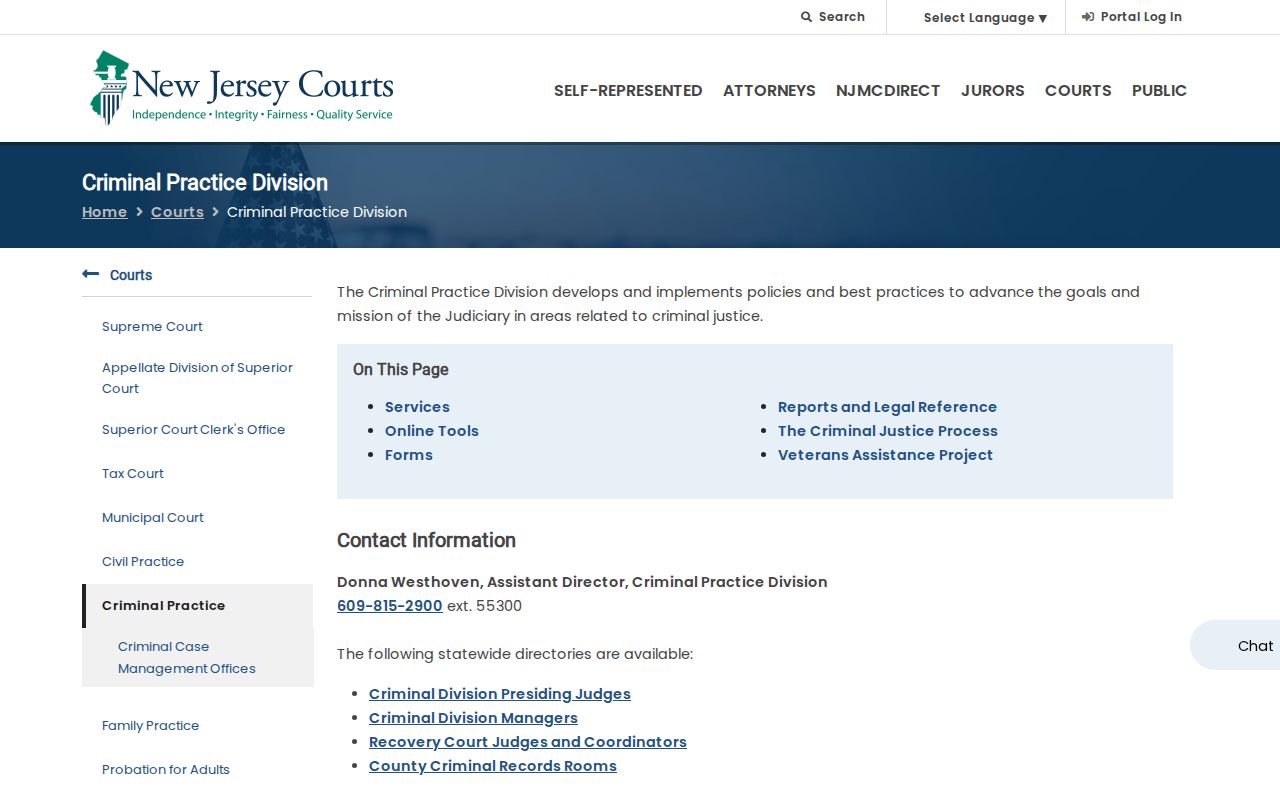
The public portal supplies tracking data, while pleadings and certified dispositions still come from the Union Criminal Records Room.
For a local complaint, the Municipal Court Case Search uses the statewide municipal schema.
Complaint or ticket identifiers are stronger than a name-only search, especially across Elizabeth, Township of Union, Plainfield, and the county's other municipalities.
| Search field | System | Use |
|---|---|---|
| Defendant name | PROMIS/Gavel | Starting point when no docket number is known |
| SBI number | PROMIS/Gavel | Precise fingerprint-linked identifier |
| County and indictment number | PROMIS/Gavel | Narrows a Union indictable matter |
| Court or municipality | Municipal Case Search | Directs the search to the local court |
| Prefix, complaint or ticket number, year | Municipal Case Search | Locates a specific municipal filing |
A municipal conviction may matter even when it never appears in a Superior Court-only search.
Union County Criminal Records: What They Contain
The fields depend on the product. An SBI history centers on identity and arrest cycles. A court file centers on docket events and adjudication. A booking record centers on intake and custody. Reading the label and source of each field is as important as reading its value.
| Name & Identifiers | Legal name, aliases, birth information, SBI or FBI number, and fingerprint identifiers where authorized. |
|---|---|
| Arrest / Booking Data | Arrest date, contributing agency, transaction number, intake, photograph, custody, bail or detention, and release. |
| Charges & Statutes | Complaint, indictment, accusation, cited statute, and degree, which may change as the case proceeds. |
| Disposition | Dismissal, plea, verdict, acquittal, diversion result, or other final procedural outcome. |
| Sentence | Custody term, probation, fines, restitution, or treatment-linked conditions stated in the judgment. |
| Custody / Supervision | County jail or state custody data, probation in the Judiciary, or parole through the State Parole Board. |
Grand-jury deliberations, juvenile information, victim details, sealed filings, and expunged records are not part of ordinary public access.
Union County Jail Records Can Change Overnight
The Union County jail lookup is updated daily, but the Sheriff's disclaimer warns that selected people may be omitted and that work release, furlough, or community placement may not be reflected. A released person is not kept current after departure. A transfer to state custody also moves the relevant search to NJDOC.
The NJDOC Incarcerated Person Search Engine is the official state-custody entry point for the New Jersey Department of Corrections (NJDOC).
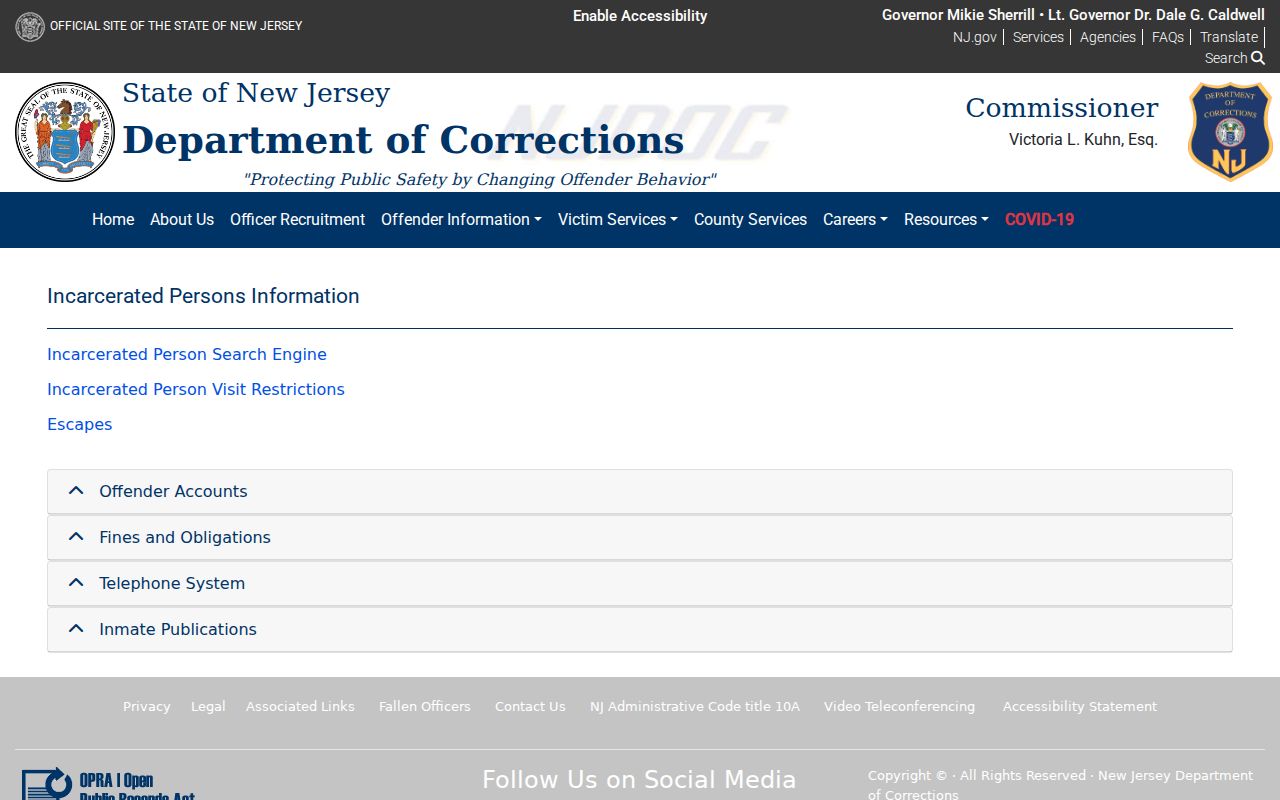
The state locator should be checked after a sentenced person leaves Union County custody, not treated as a substitute for the county jail roster.
No jail result does not prove that no arrest occurred. The person may have been released, held only in temporary municipal detention, transferred, excluded from the public display, or never admitted to Union County Corrections. Likewise, a positive result establishes custody information, not guilt.
New Jersey Public Access Laws
Access depends on the custodian and record. Police and county requests proceed under the Open Public Records Act. Court records proceed under New Jersey Court Rule 1:38. Personal statewide criminal history uses the NJSP fingerprint process. A precise request for an existing record works better than a broad demand for everything about a person.
Key New Jersey rules:
N.J.S.A. 47:1A-1 to -13 grants access to identifiable government records while preserving exemptions, fees, deadlines, and appeal routes.
N.J.S.A. 47:1A-3(b) requires specified basic crime, arrest, and charge information even when investigative narrative is exempt.
New Jersey Court Rule 1:38 makes court records presumptively public subject to exclusions and sealing orders.
N.J.S.A. 53:1-20.6 and N.J.A.C. 13:59 govern noncriminal-justice dissemination of NJSP criminal history.
N.J.S.A. 2C:52-1 et seq. controls expungement eligibility, procedure, effects, and exceptions.
Active investigation details, juveniles, victims, medical material, security-sensitive facts, and confidential personal identifiers may be withheld or redacted.
Union County OPRA Record Requests
Union County has no single records division for every criminal record. BCI controls identification files, Corrections controls jail data, the Judiciary controls case files, and each municipal police department controls its own incident reports. The Union County OPRA portal routes county requests, while police reports from Elizabeth, Township of Union, Plainfield, or another town should go to that local custodian.
Describe the department, record type, incident or case number, names, location, and date range. OPRA provides existing identifiable records; it does not require an office to answer questions or write a new explanation. General responses are due as soon as possible and normally no later than seven business days, with a fourteen-business-day period for specified circumstances under the amended law.
| Cost item | Amount or rule |
|---|---|
| Letter-size paper | $0.05 per page |
| Legal-size paper | $0.07 per page |
| Unusual medium | Actual cost |
| Postage or delivery | Actual additional cost |
| Extensive technology or labor | Reasonable special service charge disclosed in advance |
| Inspection | Ordinarily free during reasonable hours |
If a full narrative is exempt, separately request the basic date, time, location, crime type, investigating agency, and arrest or charge information identified in N.J.S.A. 47:1A-3(b).
Restricted, Sealed & Expunged Records
Juvenile cases, protected victim data, medical material, active investigative narrative, confidential identifiers, sealed warrants, and expunged matters do not appear through ordinary public channels. New Jersey expungement extracts and isolates eligible records rather than physically destroying every copy.
The Judiciary's eCourts Expungement System supports Regular, Clean Slate, Recovery Court, Marijuana, and Marijuana Decriminalization filings. A filer reviews located cases, adds missing arrests and courts, confirms that pending charges are resolved, certifies the full record, and submits a petition and proposed order. The prosecutor may object, and the court may grant, deny, dismiss, or schedule a hearing. New Jersey charges no expungement filing fee.
Regular indictable relief commonly uses a five-year statutory period, with a limited four-year route under stated conditions. Clean Slate generally uses ten years from the latest relevant conviction, payment, supervision completion, or release. Eligibility exclusions and case-specific timing make the current statute and court guidance controlling.
Union County Expungement Orders Reach BCI
A granted order must travel beyond the court docket. Union County BCI implements expungement orders in its local identification files, and the NJSP Expungement Unit updates the statewide criminal-history repository. That path explains why a court order and a stale search result can briefly coexist.
After agencies have had processing time, check PROMIS/Gavel and obtain a new NJSP Personal Record Request. If an entry remains, gather the signed order and certified disposition, then contact the agency responsible for that record. Union County's 2024 and 2025 clinics connected residents with legal help, including an October 2025 event at Kean University.
- Disposition
- The final procedural result of a charge, such as dismissal, plea, verdict, or acquittal.
- Expungement
- New Jersey's statutory process for extracting and isolating eligible arrest and court records.
- Clean Slate
- A Chapter 52 route that can address an eligible entire New Jersey record after the statutory period.
- SBI number
- The New Jersey fingerprint-linked identifier used to connect arrest cycles and reported outcomes.
Missing a municipal matter from the petition can delay or undermine relief because the filing must account for the complete eligible record.
Union County Warrant Records and Phone Scams
No comprehensive public Union County warrant database was verified. The Sheriff's Fugitives and Warrants line is 908-527-4480, while a municipal bench warrant may remain with the issuing municipal court and a Superior Court warrant belongs to the criminal case. Check both court levels and use a number independently obtained from an official page.
A December 2025 Sheriff warning described callers who spoofed official numbers, used real officer names, and sent false warrant documents. Union County officers do not demand gift cards, cryptocurrency, wire transfers, or phone payment to avoid immediate arrest. Anyone resolving their own possible warrant should verify the case number and obtain surrender, appearance, or payment instructions from the issuing court or counsel.
Warrant records may identify the issuing court, complaint number, charge, date, type, release terms, and recall or execution status. Juvenile, domestic-violence, sealed, and unexecuted investigative warrants may not be public.
Union County Supervision and Parole Records
Adult probation is state-run through the New Jersey Judiciary, Probation Services Division; Union Vicinage probation is reached through 908-787-1650. A public judgment can show that probation was imposed, but treatment notes, tests, risk assessments, addresses, and supervision operations are not a public lookup. Recovery Court combines treatment with intensive probation through five phases.
The New Jersey State Parole Board manages parole rather than the Union County Sheriff.
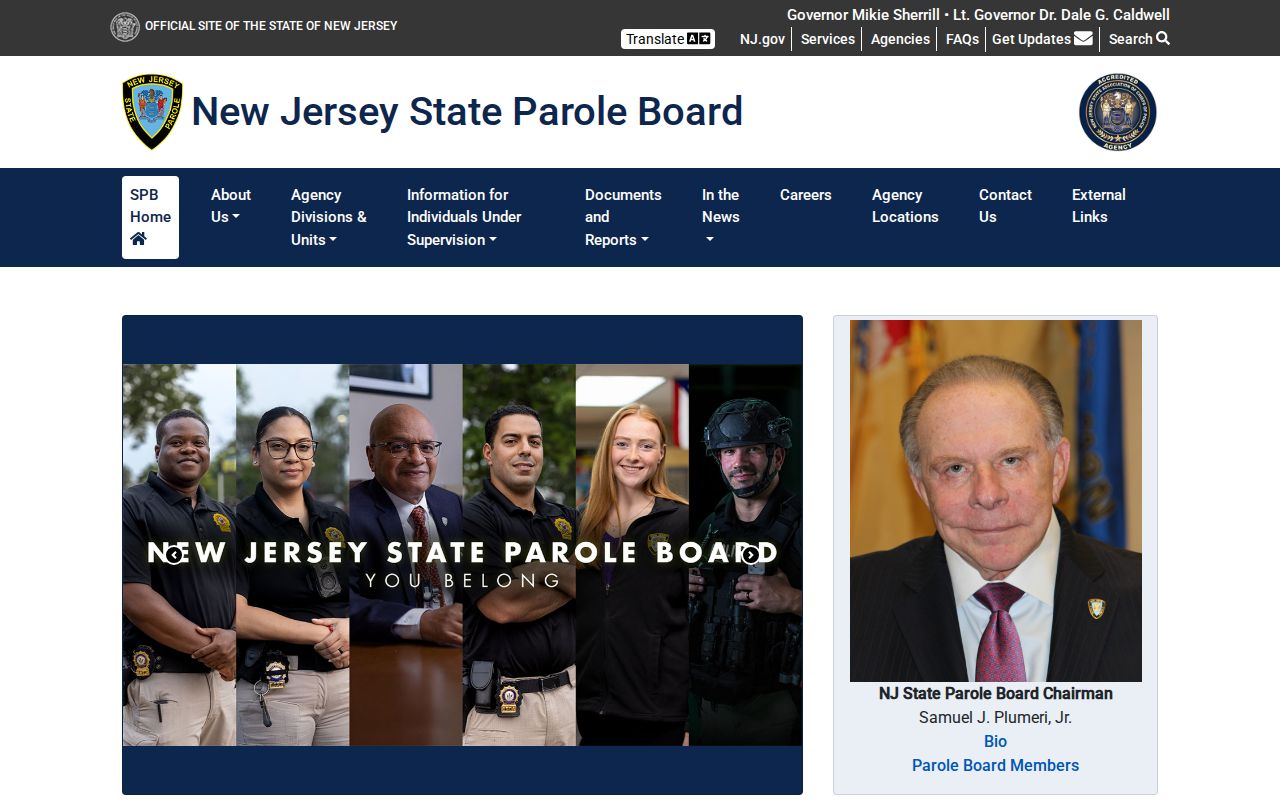
The official parole channel supplements the court judgment and NJDOC locator when a person has moved from custody into state parole supervision.
Operational parole information, victim data, security procedures, and private personal data may be withheld. For record copies, use the State Parole Board OPRA form; for status, follow the agency's public-information channel.
City-by-City Criminal Records in Union County
Union County's 21 municipalities retain their own police reports, while municipal courts hear local ordinance, traffic, disorderly-persons, and petty-disorderly-persons matters. The three largest municipalities are Elizabeth, Township of Union, and Plainfield. Each guide begins with its local police and court channels, then follows indictable cases and county custody to Elizabeth.
Elizabeth Record Check
Police records and Municipal Court are at 1 Police Plaza; county criminal records are nearby at 2 Broad Street.
Township of Union Record Check
Township Police records are distinct from Union County agencies and from Kean University public-safety records.
Plainfield Record Check
Plainfield Police holds incident reports; county Corrections and Superior Court hold later custody and case records.
Confirm the agency that created the incident before submitting a request, especially near municipal and county borders.